
Jackson
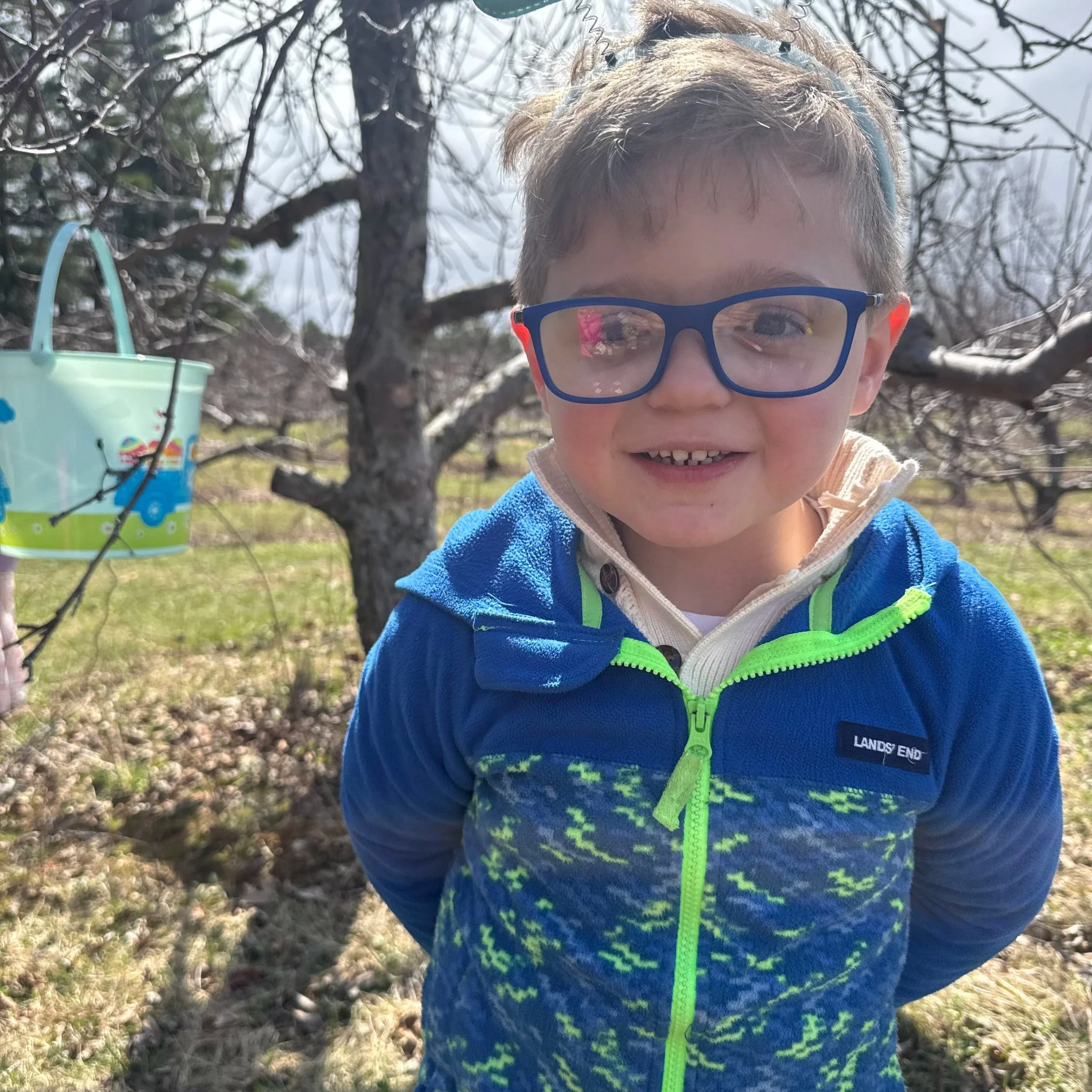
Our journey with Coats’ Disease began in early 2025. Our son, Jackson, had a routine ophthalmology appointment for what we had been told was mild nearsightedness in his right eye. During that visit, his doctor noticed that his vision was worsening instead of improving. She decided to perform a more thorough exam and take a closer look at the back of his eye—and that was the moment our lives changed. Right there in the office, she contacted a pediatric retinal specialist in Boston and urged us to schedule an urgent appointment.
When I called Boston Children’s Hospital, I was initially told Jackson’s first visit would be with a general ophthalmologist. Confused, I asked why he wasn’t being seen by a retinal specialist, as we had been advised. The receptionist explained that retinal specialists are often booked six months out. But then, in what felt like divine timing, she noticed a last-minute cancellation for the very next day with Dr. Gonzalez, the head of the retinal program. The next day, we brought Jackson in and learned that fluid was building in the back of his eye. Dr. Gonzalez told us he would need an exam under anesthesia (EUA) the following week to determine whether this was Coats’ Disease or retinoblastoma. That week of waiting was one of the darkest and longest of our lives.
During that time, I searched endlessly for information. I found the Jack McGovern Coats’ Disease Foundation, read countless patient stories, and connected with other parents in the Coats’ community. People from all over the world reached out, offering comfort, support, and hope when we needed it most.
I won’t pretend that 2025 was a normal year for our family. Jackson has undergone eight exams under anesthesia, along with cryotherapy, laser treatments, and steroid injections. In the beginning, his recoveries were painful, and the swelling was significant. We spent many difficult days trying to administer multiple eye drops—sometimes three or four different medications, up to six times a day. His eye was often swollen, and even now, looking back at photos from that time brings me to tears. And yet, through it all, Jackson has been nothing short of incredible. His strength and resilience have amazed us. After each procedure, by the end of the same day, he would often be back outside playing or even riding his bike. The very next day, he would return to preschool, surrounded by the love and support of his teachers.
We feel deeply grateful for the exceptional care we received at Boston Children’s Hospital, especially from Dr. Gonzalez. After Jackson’s second EUA—when he received aggressive cryotherapy and steroid treatment—his swelling became so severe that I feared the worst. We called the on-call physician on a Saturday morning, and Dr. Gonzalez personally came into the hospital to examine Jackson. That level of care and compassion meant everything to us. Thankfully, Jackson’s eye has stabilized, and he hasn’t needed treatment since last fall. We continue to see Dr. Gonzalez every one to two months, and while we don’t currently have another EUA scheduled for a few months, these follow-ups help ensure everything remains stable and allow doctors to monitor areas that are difficult to examine while he’s awake.
It took me a long time to reach a place of acceptance and to stop living in constant fear about what the future might hold for my son. If you are a parent just beginning this journey, I want you to know this: our 5½-year-old son is active, joyful, and thriving. He plays karate, T-ball, and soccer, and he just learned to ride a two-wheeled bike. He talks about his “bad eye” with a smile and a sense of acceptance that inspires us every day. This journey isn’t over, and it may never fully be. But we are so grateful to the Jack McGovern Coats’ Disease Foundation and the support they provided during those early, overwhelming months. In the beginning, other parents told me that it would get easier—that I wouldn’t cry every day or feel consumed by fear. At the time, I couldn’t imagine that being true. But it is. Life may never look the same as it once did, but you will find a new normal—and it will get better.

FAQ
At the Jack McGovern Coats’ Disease Foundation, we are often contacted by anxious parents or patients who are seeking information after receiving a diagnosis of Coats’ Disease. The questions below are provided as a resource to assist you as you and your doctor decide the best approach for treatment. These questions do not constitute any form of medical advice or diagnosis. Each patient is unique. An experienced retinal specialist who has examined the patient is the best source of information for diagnosis and treatment. We always recommend getting a second opinion.
-
Ahead of any treatments or procedures, it is important to ask yourself and the doctor the following questions:
How do you know that this is Coats’ Disease?
Has your doctor treated other patients with Coats’ Disease?
Have you sought a second opinion? If not, please consult our Doctor Directory for knowledgeable doctors in your area.
-
What Stage of Coats’ Disease is he/she in?
Will his/her vision get worse over time?
Will the eye have pain?
Will his/her eye start to turn out? Is muscle corrective surgery an option?
Are cataracts likely?
How likely is glaucoma? (due to retinal detachment)
Is there calcification?
What is the anticipated disease progression?
-
Is there a thorough vision exam available?
Where is the vision affected? (central/peripheral/distance)
Does he/she have depth perception? (3D visibility)
What about the non-Coats’ eye?
To what extent is his/her vision affected?
Will we be able to use this as a baseline to measure progress/decline?
Find a Doctor